When Algorithms Know Too Much: The SEC's Uphill Battle Against AI-Driven Trading Intelligence
For decades, insider trading enforcement operated on a relatively straightforward premise: someone with privileged access to corporate information passed it along, and someone else traded on it. The legal architecture built around that premise—rooted in landmark cases like United States v. O'Hagan and the SEC's Rule 10b-5—was designed for a world of whispered tips and country club handshakes. That world is rapidly becoming obsolete.
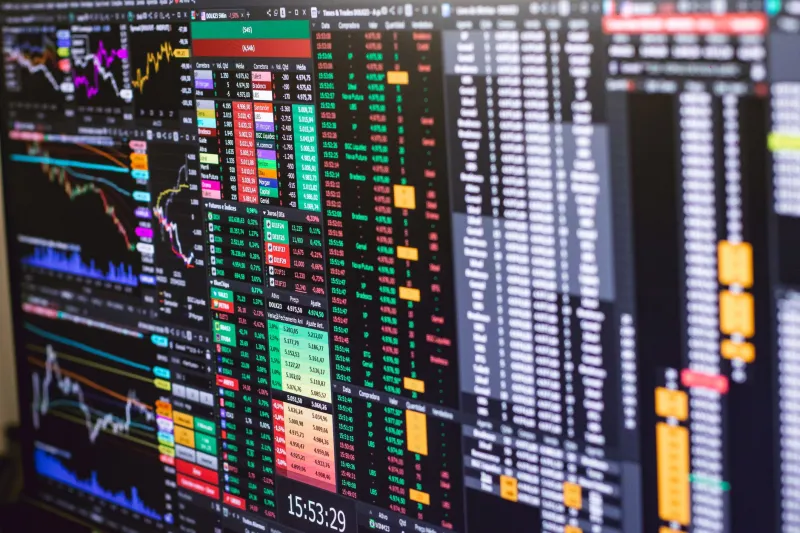
Today, a growing cohort of hedge funds and institutional asset managers are deploying machine learning systems capable of synthesizing thousands of disparate, technically public data signals into predictive trading intelligence that rivals—and in some cases surpasses—what a well-placed corporate insider might know. The question regulators are struggling to answer is not whether this constitutes cheating. The question is whether the existing legal vocabulary even has the words to describe it.
The Alternative Data Explosion
The market for alternative data—information sourced outside traditional financial filings and news releases—has grown into a multibillion-dollar industry. Vendors now offer everything from satellite imagery tracking retail foot traffic, to credit card transaction aggregates, to sentiment scores derived from scraping employee review platforms. None of this data is, strictly speaking, restricted. But in the hands of a sophisticated machine learning system, it can paint an extraordinarily detailed picture of a company's financial trajectory well before that picture appears in a quarterly earnings release.
Consider a hedge fund that aggregates anonymized consumer spending data from a payment processor, overlays it with shipping manifest records, and feeds both into a predictive revenue model for a major retailer. The individual data streams are public or commercially licensed. The synthesis, however, may yield earnings estimates accurate to within a fraction of a percent weeks ahead of the official announcement. Is that analysis? Or is it something closer to what the law has historically tried to prevent?
Legal experts are divided. "The materiality standard under securities law asks whether a reasonable investor would consider the information significant," noted one securities attorney with experience in SEC enforcement proceedings. "If your model is consistently and substantially more accurate than consensus estimates, you have to ask whether the information you're effectively generating meets that threshold—regardless of how it was assembled."
Enforcement Actions Signal Regulatory Uncertainty
The SEC has not been entirely passive. In recent years, the agency has pursued cases involving alternative data that edged closer to conventional insider trading. A 2021 enforcement action targeted a data analytics firm that had obtained material non-public information from corporate insiders under the guise of market research—a more clear-cut violation. But the agency has been markedly more cautious when the underlying data is genuinely public, even if the analytical conclusions drawn from it are extraordinary.
The SEC's Division of Enforcement has acknowledged internally that its existing surveillance infrastructure was not built for the volume or complexity of modern algorithmic trading. The agency's EDGAR-based monitoring systems and trading pattern analysis tools are effective at detecting conventional manipulation but are poorly suited to identifying the kind of mosaic-theory violations that AI-driven strategies may represent.
The mosaic theory itself—a long-standing regulatory doctrine holding that analysts may combine non-material, non-public information with public data to form material conclusions, without violating securities law—has become something of a loophole in the algorithmic era. What was conceived as a defense for diligent fundamental analysts has been quietly repurposed as a structural shield for data-driven trading operations processing millions of inputs per second.
Stress-Testing the Boundaries
Market participants are acutely aware of where the lines might be drawn—and many are actively probing those boundaries. Compliance officers at several large quantitative funds have reportedly commissioned internal legal reviews specifically examining whether their alternative data procurement practices could be characterized as inducing breaches of fiduciary duty by third-party data vendors. That concern is well-founded: if a satellite imaging company is contractually prohibited from sharing certain client-specific data but does so anyway, a fund trading on that data could face liability even if it was unaware of the breach.
The SEC's 2022 Risk Alert on investment adviser use of alternative data signaled that the agency is paying attention, even if formal enforcement has lagged. The alert emphasized that funds must conduct due diligence on data vendors to ensure the information was obtained legally and ethically—a standard that sounds straightforward but becomes deeply complex when data passes through multiple aggregators and anonymization layers before reaching a trading desk.
Some compliance professionals argue that the burden is being placed in the wrong direction. "You're asking buy-side firms to audit the data supply chain in ways that even the original vendors can't fully document," said one chief compliance officer at a mid-sized quantitative fund, speaking on condition of anonymity. "That's an impossible standard to meet consistently."
What Regulators Could—and Should—Do
Policy analysts tracking SEC rulemaking suggest the agency faces a structural dilemma. Aggressive enforcement against AI-driven analysis risks chilling legitimate research and price discovery—functions that markets depend on. But inaction effectively rewards those with the most sophisticated technology and the deepest data budgets, creating a two-tiered market where information advantages are systematically monetized by the few.
Several proposals have circulated in academic and regulatory circles. One approach would require large quantitative funds to disclose their primary alternative data categories in periodic filings, creating a paper trail that regulators could audit. Another would extend the definition of material non-public information to include algorithmically derived conclusions that meet a predictive accuracy threshold—though legal scholars note this would require Congressional action and would face significant constitutional challenges.
The SEC under Chair Gary Gensler demonstrated an appetite for expanding disclosure requirements broadly, and the agency's successor leadership has continued to examine AI's role in market structure. But translating that attention into enforceable standards has proven elusive.
The Clock Is Running
For investors and compliance professionals, the practical implication is clear: the regulatory environment surrounding AI-powered market analysis is in active flux, and the cost of being on the wrong side of a future enforcement action could be substantial. Firms that are building compliance frameworks now—rather than waiting for definitive guidance—are better positioned to demonstrate good faith in any future proceeding.
The SEC may be struggling to keep pace with algorithmic innovation, but it retains the ability to make examples. In a landscape where the gray zone is widening by the quarter, the firms that treat regulatory ambiguity as an opportunity rather than a risk may eventually discover that the agency's patience has limits—even if its technical capabilities do not.